Family Histories

       Home       NEW Updates      About Us       Feedback      Historic Sites       Consultants          Contact Us       Terms/Conditions


BEEJENUP WAYSIDE INN   NEW

Compiled by Gordon Freegard from research by Merilyn Stewart

Beejenup/Beeginup was first selected by James Bridges in about 1870  Situated on the corner of Pallinup and Beejenup Roads, Gnowangerup. It was referred to for some time as “The Wayside Inn. It is believed that Bridges was a time-expired man of the British army, many of whom were recruited as guards for the convicts who were working on the Perth-Albany road. Grants of land were made to these pensioners to induce them to remain in WA.
The historic site contributed to transport in the area, serving as a crucial resting point for weary travelers navigating the old Salt River road.

The origins of the Wayside Inn trace back to a time when long-distance travel was fraught with challenges, and accommodations were essential for those journeying through the vast rural landscapes.

Horses also needed resting time, especially in the time after feeding. In Europe travellers were able to hire horses at these stops to quickly continue their journey, however in WA at that time there were not enough numbers of people travelling to provide this service.


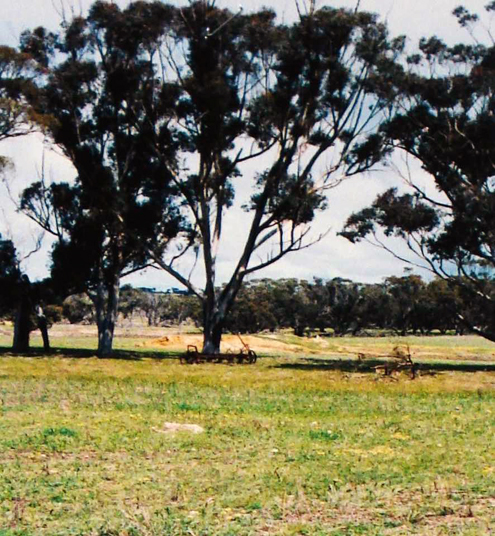
BEEJENUP WAYSIDE INN SITE
 

James Bridges, one of the early settlers, established the inn to cater to the needs of the traveling public. By providing respite, food, and possibly stabling for horses, the Beejenup Inn filled a vital role.

It was on an early travel route to Albany from the Broomehill/Pallinup area.
The road was made by convicts according to Reg Gillespie; a local man who owned Pallinup Station at one time.

Reg also stated the convicts were stationed at Martinup during the roadworks.

Leo Treasure from Martinup mentioned with a laugh that some of shepherds or men employed to shear or harvest would “hitch a ride” to Albany on the wagons, only to get as far as Beegenup and stay there until all their wages were spent
There was a blacksmith's shop here as well. Bridges established the inn to cater to the needs of the traveling public. By providing respite, food, and possibly stabling for horses, the Beejenup Inn filled a vital role.


Bridges died in 1884 and was buried at Beejenup. His wife may possibly be buried there as well.
The inn's heritage is connected with the life and legacy of its founder, James Bridges. His grave, located nearby, is a reminder of the human story behind the wayside inn. Bridges grave itself is said to be marked by a simple pile of stones and surrounded by introduced trees.
The remnants of the Beejenup Wayside Inn have diminished over the years, little remains to indicate the once-busy harvest and wool-clip stopover.

After Bridges' ownership, the property changed hands, eventually sold to the Murray brothers. However, there doesn’t appear to be any record of them continuing the business - they shifted to wholly agricultural endeavors, running a merino sheep stud.

In the early 1890s, the inn came under the management of Richard R. Burridge, who continued the tradition of hospitality for travelers.
It was renamed Springdale Inn. During this period, the inn became more than just a lodging facility; it was also a social hub for the community, there was diverse array of travelers, including prospectors, merchants, and locals. The exchanges of information would have been very interesting!

The Beejenup Wayside Inn illustrates a unique chapter in Western Australia's history, illustrating the logistics of travel and the opportunity it provided the for social contact for local settlers.

At the site of the Wayside Inn, Beejenup, little is left to suggest there was an inn there. James Bridge's grave is in the corner of the block. About 5% of the site remains - basically a pile of stones and the introduced trees. The site has been registered as a heritage location.


Every endeavour has been made to accurately record the details however if you would like to provide additional images and/or newer information we are pleased to update the details on this site. Please use CONTACT at the top of this page to email us. We appreciate your involvement in recording the history of our area.


References:                 Article:       Gordon Freegard
                                                  

                                  Image:     


Copyright : Gordon Freegard 208 - 2026